

Key Technologies for Pneumatic Fittings
Compression-type tube fittings offer several technical advantages, including stable and reliable connections, high pressure resistance, excellent sealing performance, suitability for repeated assembly, and ease of installation and maintenance.
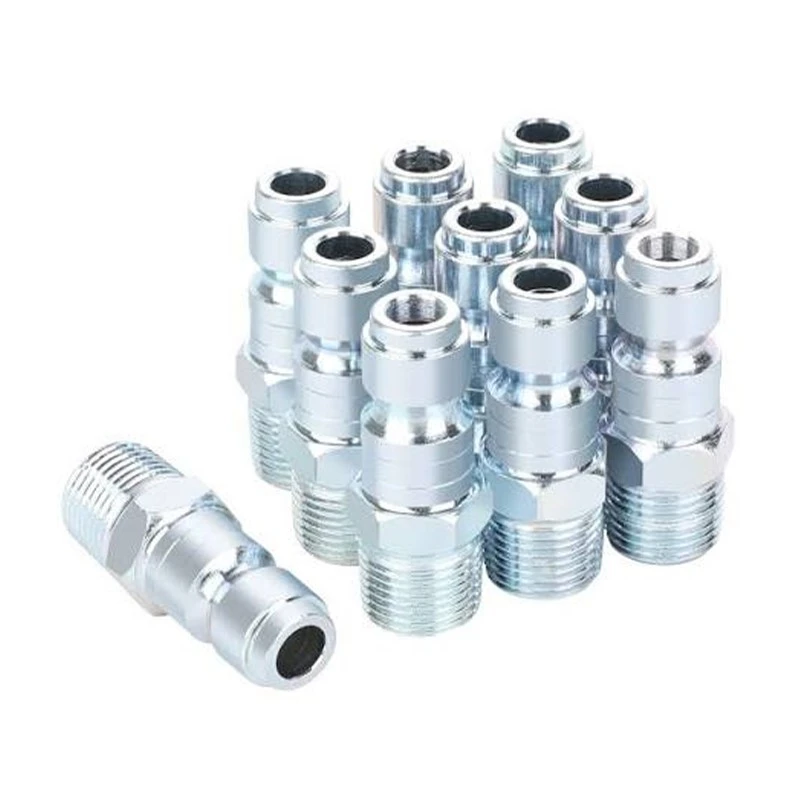
Pneumatic push-to-connect fittings feature a full-flow design that ensures no loss of flow. Through the use of O-rings and an optimized structural design, they maintain high airtightness under both static and dynamic conditions. These fittings are easy to install: straight threads are equipped with O-ring seals, while tapered threads are coated with Teflon to ensure an instant seal. No tools are required for connection or disconnection, allowing for rapid, efficient assembly. Furthermore, they can rotate while under pressure-preventing the hose from twisting-and are simple to maintain or replace. The design also prevents air ingress during the connection process. Available in a wide range of configurations and sizes, these fittings are compatible with various types of tubing, such as nylon, PU, and Teflon. They come in diverse forms-including straight unions, reducing unions, tees, and elbows-enabling users to alter fluid direction, adjust flow rates, or change the number of inlets and outlets. Key performance specifications include an operating pressure of 8–10 kgf/cm², an operating temperature range of 20–80°C, and compatibility with compressed air.
When using pneumatic push-to-connect fittings, ensure that the outer diameter of the tubing falls within the specified tolerance range. Verify that the end of the tubing is cut square and that the outer surface is free of damage. When inserting the tube, push it in as far as it will go to ensure a proper seal. Before attempting to disconnect the tubing, confirm that the internal pressure has been reduced to zero.
No Information


