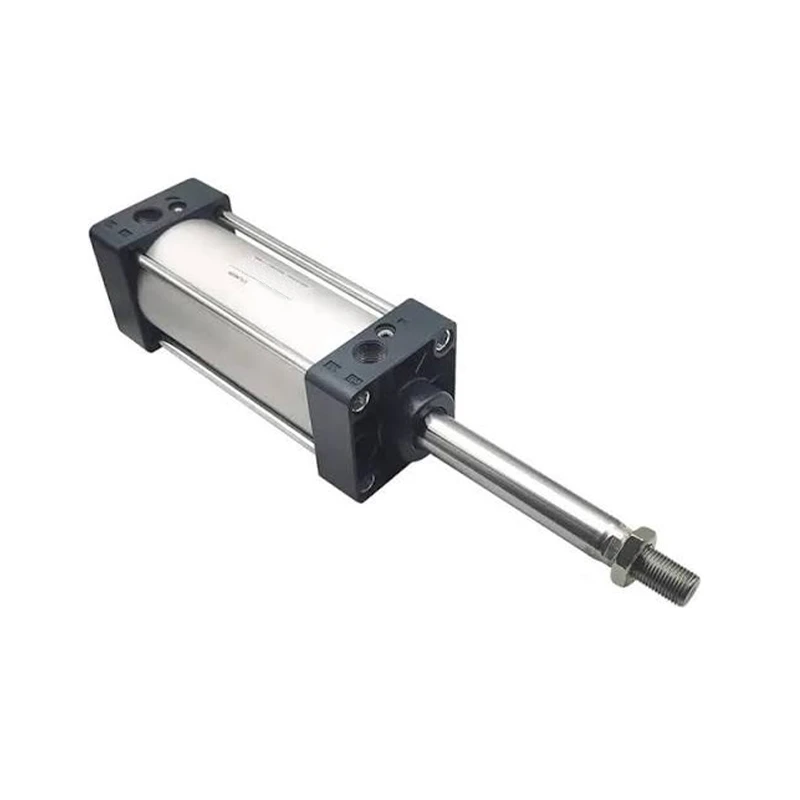

Cylinder structure
A pneumatic cylinder consists of a cylinder barrel, end caps, a piston, a piston rod, and seals.
1) Cylinder Barrel
The inner diameter of the cylinder barrel determines the output force of the cylinder. The piston must be able to slide back and forth smoothly within the barrel; therefore, the inner surface of the barrel should have a surface roughness of Ra 0.8 μm.
In SMC CM2 series cylinders, a composite seal is used on the piston to provide bi-directional sealing. The piston and piston rod are joined via a press-riveting connection, eliminating the need for a nut.
2) End Caps
The end caps feature ports for air intake and exhaust; some designs also incorporate a cushioning mechanism. The rod-side end cap is equipped with a seal and a dust wiper to prevent air leakage along the piston rod and to keep external dust and debris from entering the cylinder.
3) Piston
The piston is the component within the cylinder that is subjected to pressure. A piston seal is installed to prevent air from leaking between the chambers on either side of the piston. A wear ring on the piston improves the cylinder's guidance, reduces wear on the piston seal, and lowers frictional resistance.
4) Piston Rod
The piston rod is the most critical load-bearing component in a pneumatic cylinder. It is typically made of high-carbon steel-often treated with a hard-chrome plated surface-or stainless steel to resist corrosion and enhance the durability of the seals.
5) Seals
Seals used for components undergoing rotary or reciprocating motion are known as dynamic seals, while those used for stationary components are called static seals.