

Comparison of Pneumatic Cylinder Applications
Pneumatic and electric systems are not mutually exclusive; rather, the choice between them depends on specific requirements. Pneumatic actuators offer clear advantages: they are exceptionally robust and well-suited for harsh environments-such as those involving dust, grease, water, or cleaning agents. Furthermore, they are easy to install, cost-effective, simple to operate, and well-suited for standard gripping tasks.
Electric actuators equipped with servo motors excel in applications requiring rapid force application and precise positioning. They are the ideal choice for tasks demanding high accuracy, synchronized motion, and programmable, adjustable positioning. Electric drive systems-comprising servo or stepper motors paired with closed-loop position controllers-effectively complement pneumatic systems by addressing their limitations.
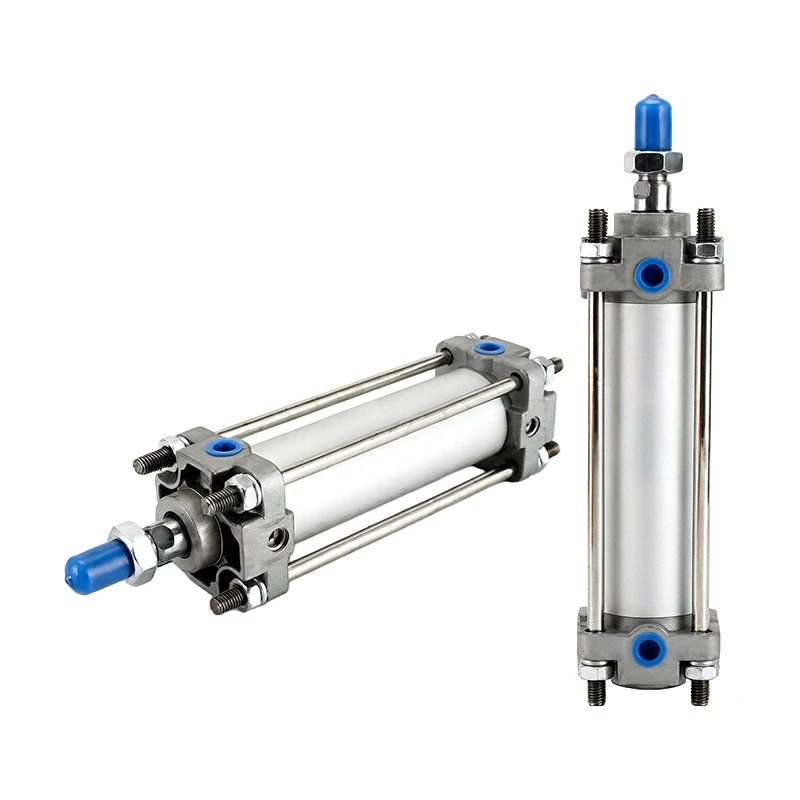
From the perspectives of both technology and total cost of ownership, pneumatic cylinders offer distinct advantages. However, the final selection of a drive technology should be based on a comprehensive evaluation of various factors. As modern control systems become increasingly complex and sophisticated, no single drive technology can satisfy every functional requirement. Pneumatic cylinders are excellent for simple, high-speed linear reciprocating motion; they feature a straightforward design, are easy to maintain, and can operate reliably in demanding conditions-such as environments with explosion risks, high dust levels, or significant moisture.
Electric actuators are primarily used in applications requiring precise control. Modern automated equipment increasingly demands greater flexibility-often requiring a single machine to process workpieces of varying sizes. This necessitates multi-point positioning, as well as precise control or synchronized tracking of operating speed and torque-capabilities that are beyond the reach of traditional pneumatic controls but can be easily achieved with electric actuators. In short, pneumatic cylinders are best suited for simple motion control, while electric actuators are the preferred choice for applications requiring precise motion control.


