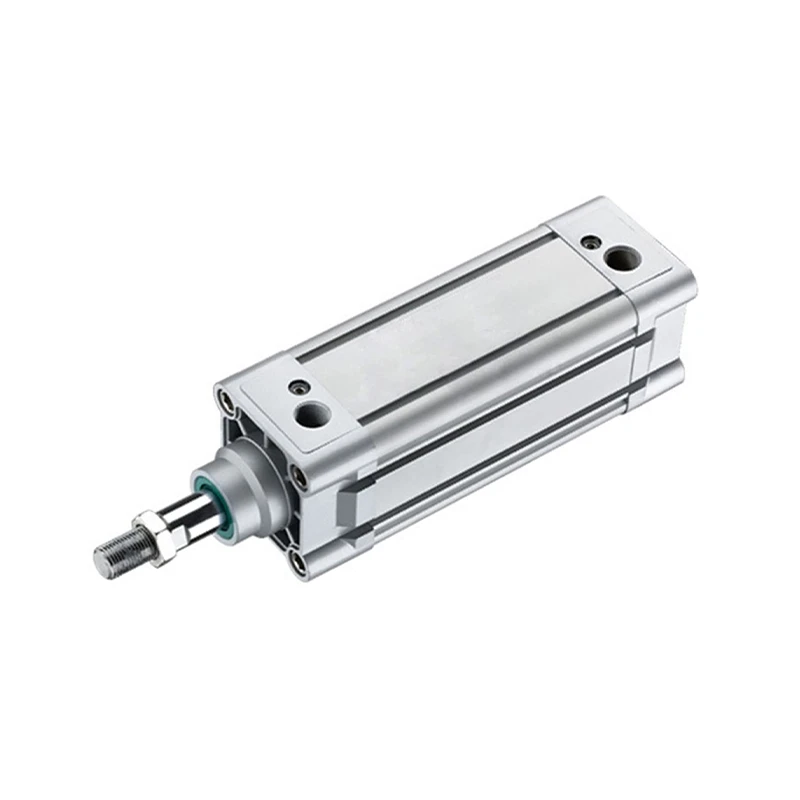

Advantages Of Cylinders
(1) Lower requirements for the user. Pneumatic cylinders feature a simple operating principle and structure, making them easy to install and maintain; they do not demand a high level of technical expertise from the user. Electric cylinders, by contrast, require the operator to possess a certain degree of electrical knowledge; otherwise, there is a high risk of damage due to improper operation.
(2) Higher output force. The output force of a pneumatic cylinder is directly proportional to the square of its bore diameter. The output force of an electric cylinder, however, depends on three factors: bore diameter, motor power, and the pitch of the lead screw-with larger bore diameters and motor power, and a smaller lead screw pitch, resulting in greater output force. A pneumatic cylinder with a 50mm bore can achieve a theoretical output force of 2000N, whereas an electric cylinder of the same bore size-though varying by manufacturer-typically does not exceed 1000N. Clearly, pneumatic cylinders hold an advantage in terms of output force.
(3) Greater adaptability. Pneumatic cylinders can function effectively in both high- and low-temperature environments and offer resistance to dust and water, allowing them to operate in a wide range of harsh conditions. Electric cylinders, due to their reliance on numerous electrical components, have stricter environmental requirements and are less adaptable.